


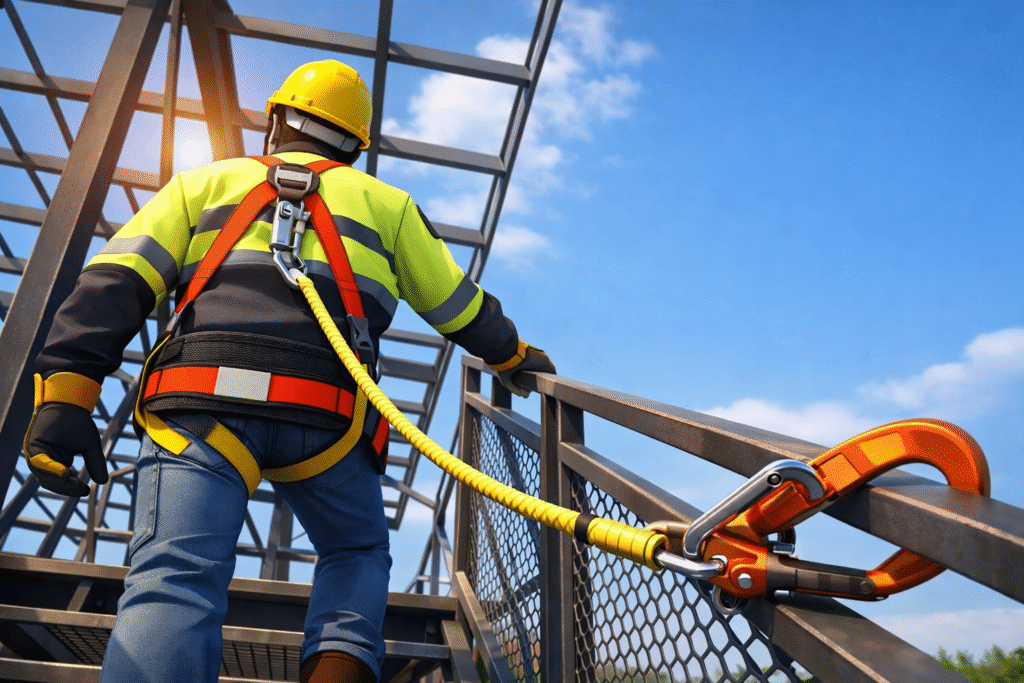
ROPE ACCESS TRAINING IN DURBAN
Rope access Level 1 technicians need to know more than how to put on a harness. They must know how to use their gear the right way. They must spot dangers on the job. They also need to know how to help in a rescue.
ACCREDITED | SAQA US 230000 | - 5 DAY COURSE
Industrial rope access demands practical, hands-on capability, which is why Level 1 technicians must learn basic manoeuvres under strict, expert supervision to ensure they can inspect equipment, master basic knots, safely ascend and descend dual-rope systems, and work efficiently within a crew under the direct eye of a Level 3 supervisor.
FALL ARREST TRAINING COMPARED TO ROPE ACCESS LEVEL 1
Fall Arrest training focuses on stopping a fall that has already happened, while Rope Access Level 1 teaches you how to use a dual-rope system to actively climb, suspend yourself, and work in hard-to-reach areas.
Fall Arrest is a quick course that shows you how to use lanyards and anchors to safely catch you if you slip from a structure or platform. In contrast, Rope Access Level 1 is a highly technical program where you learn to move up and down ropes, tie essential knots, pass obstructions mid-air, and assist in complex rescues.
While Fall Arrest provides basic protection on a structure, Rope Access Level 1 gives you the full physical mobility to perform specialized tasks where no platform exists.
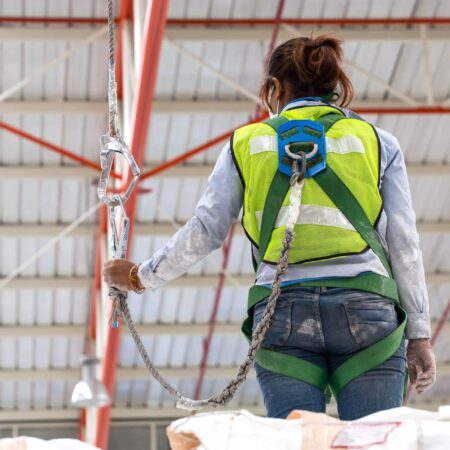
REQUIREMENT TO ATTEND -
Copy of identification document / passport.
Be in possession of a valid medical fitness certificate.
Safety Shoes.
Learners must have basic numeric literacy and be able to understand, read and write English (candidates with special needs can be accommodated on request).
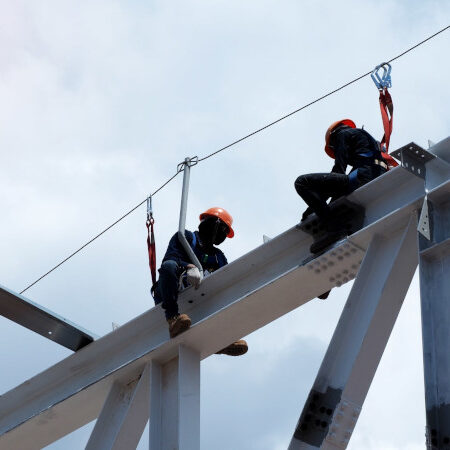
WHO SHOULD ATTEND?
This training is ideal for construction workers, telecom technicians, engineering inspectors, and anyone who needs to build a career working safely at heights or accessing hard-to-reach areas.You should attend this course if your job requires you to climb, descend, or hang mid-air using ropes to complete your daily tasks.
It is perfect for beginners looking to enter the industrial sector, as well as safety officers and site supervisors who need to understand rope safety standards. If you want to work on offshore oil rigs, wind turbines, high-rise buildings, or industrial plants, this course provides the entry-level certification you need to join a professional rigging crew.
WHY CHOOSE KC INTERNATIONAL?
- Accredited Training Provider
- IWH Accredited
SAQA US 230000 aligned
Experienced Facilitators
Training is delivered by facilitators with real site experience in construction, industrial, and maintenance environments.
PRICE PER PERSON
Course Fees
From R8,500 per person
Included in the Fee
- Printed training material
- Full practical equipment
- Harnesses and lanyards
- Qualified instruction
- Individual assessment
- Certificate of competence
No hidden costs.
GROUP BOOKINGS AND INDIVIDUAL BOOKINGS
Please contact us for more information
COURSE INFORMATION
US230000 – Perform a limited range of rope access tasks and rescues.
NQF Level 2
Credits: 6
Certificate is valid for 3 years.
Designation: Rope Access Technician (Level 1).
Course Details
Unit Standard: Aligned to SAQA Unit Standard 230000.
Core Skills: Shows how to use double rope systems, tie basic knots, and safely climb up and down ropes.
Rescue Skills: Covers basic rope rescues under the close eye of a Level 3 supervisor.
Course Contents
Theoretical Knowledge
- Introduction to work at height.
- Work at height definitions.
- Legislation regarding work at height.
- Understanding on-site risk assessments.
- Appropriate equipment care and pre-use climbing inspection methods.
- Identification and use of climbing equipment.
- Limitations of climbing equipment.
- Limitations of safe anchoring points.
- Managing sharp edges.
- Understanding the advantages of a “buddy system”.
- Basic knowledge of vertical and horizontal lifelines.
- Understanding minimum free space areas.
- Understanding fall factors.
- Understanding the use of various rope access knots.
- Understanding suspension trauma.
- Correct completion of a rope access log book.
- Knowledge of Gravity Vertical and Horizontal lifelines.
- Knowledge of Fallprotec Securail systems.
- Knowledge of Fallprotec SafeAccess systems
Practical Skills:
- Assemble a fall arrest and rope access kit.
- Perform pre-use climbing equipment inspections.
- Rope coiling/bagging.
- Selecting safe anchoring points.
- Implement the “buddy system”.
- Making and using various rope access knots.
- Use of a rope access work seat.
- Use fall arrest techniques and equipment.
- Climbing over the edge of a building.
- Rigging double working ropes. (Double loop figure 8 and Y-hang method)
- Assemble 1:1 and 3:1 lifting system.
- Perform various rope access manoeuvres:
1 Ascending ropes
2 Descending ropes
3 Traversing a loop (long and short)
4 Traversing a re-belay
5 Rope to rope transfers (long and short)
6 Descending over the edge
7 Deviation (single and double)
8 Vertical and horizontal aiding - Rescue from a loaded back-up device – “self rescue”.
- Snatch rescue from a descending device – “buddy rescue”.
- Safe use of Gravity Vertical and Horizontal lifelines.
- Safe use of Fallprotec Securail systems.
- Safe use of Fallprotec SafeAccess systems.
Frequently Asked Questions
Is the certificate valid for 3 years?
Yes, most companies require renewal every 3 years, depending on site policy.
Do supervisors need the training?
No but supervisors and safety officers responsible for elevated work should be competent in fall arrest systems.
Do we still need a fall protection plan?
Yes. Training does not replace the legal requirement for a site-specific fall protection plan.
Legal Compliance
This course is aligned with South African Occupational Health and Safety Act requirements for work at height, including fall protection planning, safe use of PPE, rescue preparedness, and competent supervision.
Training supports compliance for:
- Safety files
- Tender requirements
- Site inductions
- Contractor compliance
- Supervisor competency